
Gooding County Criminal Court Cases
Gooding County divides criminal work between two court divisions at 624 Main Street in Gooding. District Court is the felony trial court. Its clerk keeps felony pleadings, orders, judgments, and certified copies. The Magistrate Division handles misdemeanors, infractions, initial appearances, and preliminary felony matters. A felony may therefore appear first in a magistrate docket before moving into District Court for trial-level proceedings.
The clerk is the custodian of the judicial file. Police reports and jail booking entries remain with the agency that made or recorded the arrest. Prosecutors may amend, reduce, or decline the allegation made at arrest, so the filed complaint, information, or indictment is the sound starting point for learning what charge the court actually considered. The county's District Court page lists its public contact channel and schedule.
The official District Court image below comes from that county source.
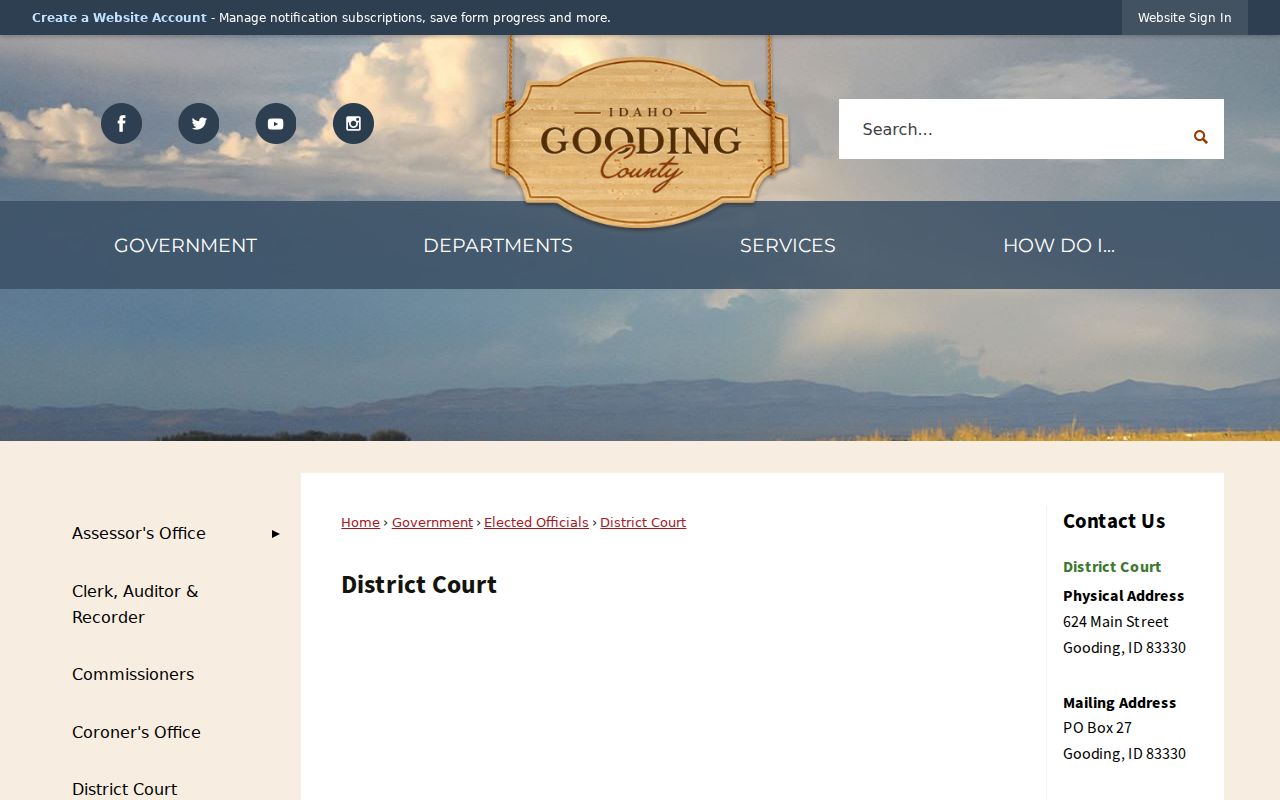
It identifies the local office that holds Gooding County felony case records rather than arrest reports.
Search Gooding Cases in iCourt
The Idaho iCourt Portal covers every Idaho county and offers Smart Search, Search Hearings, and payment functions. Basic public searching is free, but anonymous access does not promise every filed document. The portal needs JavaScript and cookies and may display a CAPTCHA. Official guidance favors a desktop or laptop for payments. Name searches work best in the format “Last Name, First Name,” while a full Gooding County case number is the strongest key.
This image was captured from the official statewide portal.
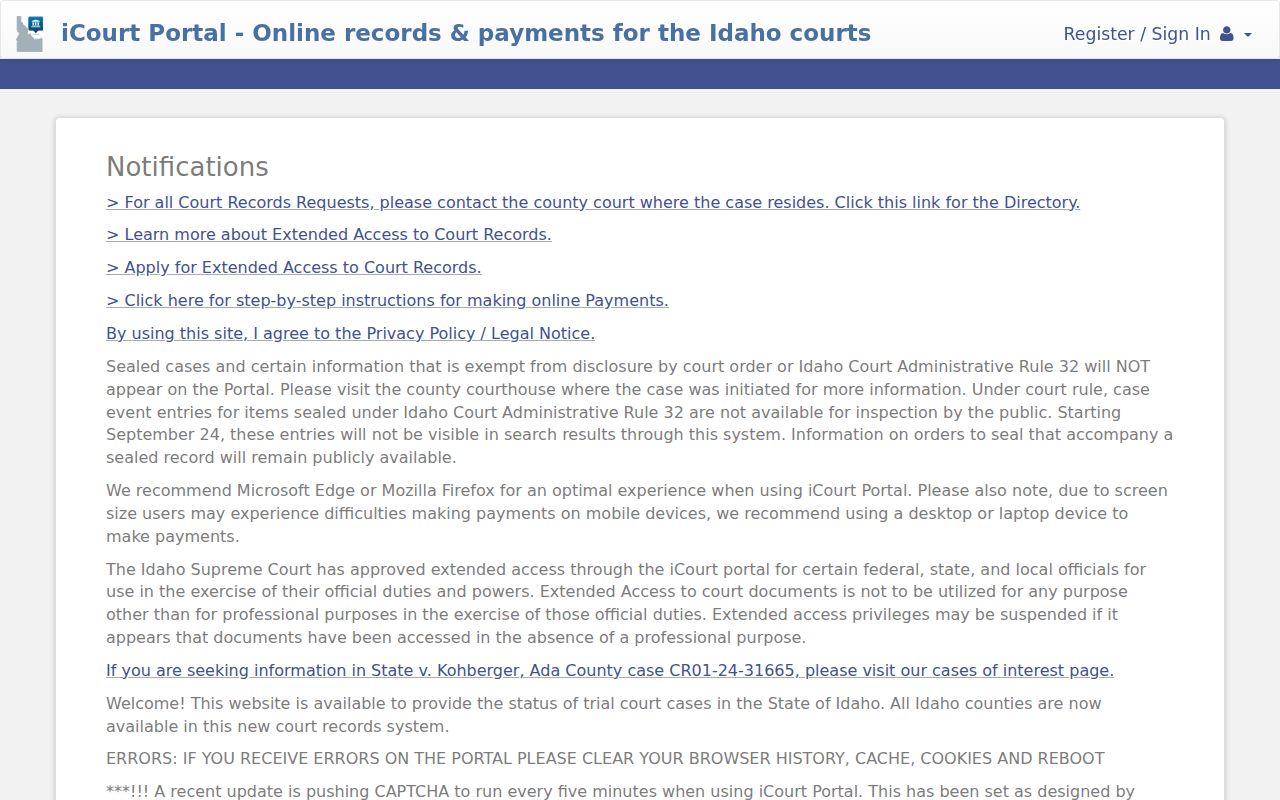
The portal is the remote index; the Gooding County clerk remains the source for certified or omitted documents.
Searching Gooding County Case Records
Begin with enough detail to separate people who share a name. A case number avoids many false matches. If the screen lacks a paper or an older case, move from iCourt to the proper Gooding County counter.
- Open Smart Search and choose a party name or full record number.
- Enter a name as last name, then first name, or use the exact case number.
- Apply location and case or date filters to narrow the Gooding County results.
- Read the event list, hearing entries, and status without assuming an event is an outcome.
- Ask the clerk for the named document, certification, or archive retrieval.
| Control | Type | Required | Use |
|---|---|---|---|
| Smart Search | Navigation | No | Opens party or record-number searching |
| Search term | Text | Yes | Accepts “Last Name, First Name,” a full record number, and wildcard searches |
| Advanced filters | Expandable | No | Narrows by location and available case or date fields |
| Search Hearings | Navigation | No | Searches by date range, case, party, attorney, or judicial officer |
| Items per page | Menu | No | Shows 10, 25, 50, or 200 results in the tutorial |
Gooding Court Divisions Compared
The county's Magistrate Court page identifies the division that handles misdemeanors and early felony steps. District Court handles the felony trial file. These are not duplicate indexes. The same prosecution may create linked entries as it advances, and the case number and filed papers explain which court now controls the matter.
The official Magistrate Court image provides a visual reference for that separate counter.
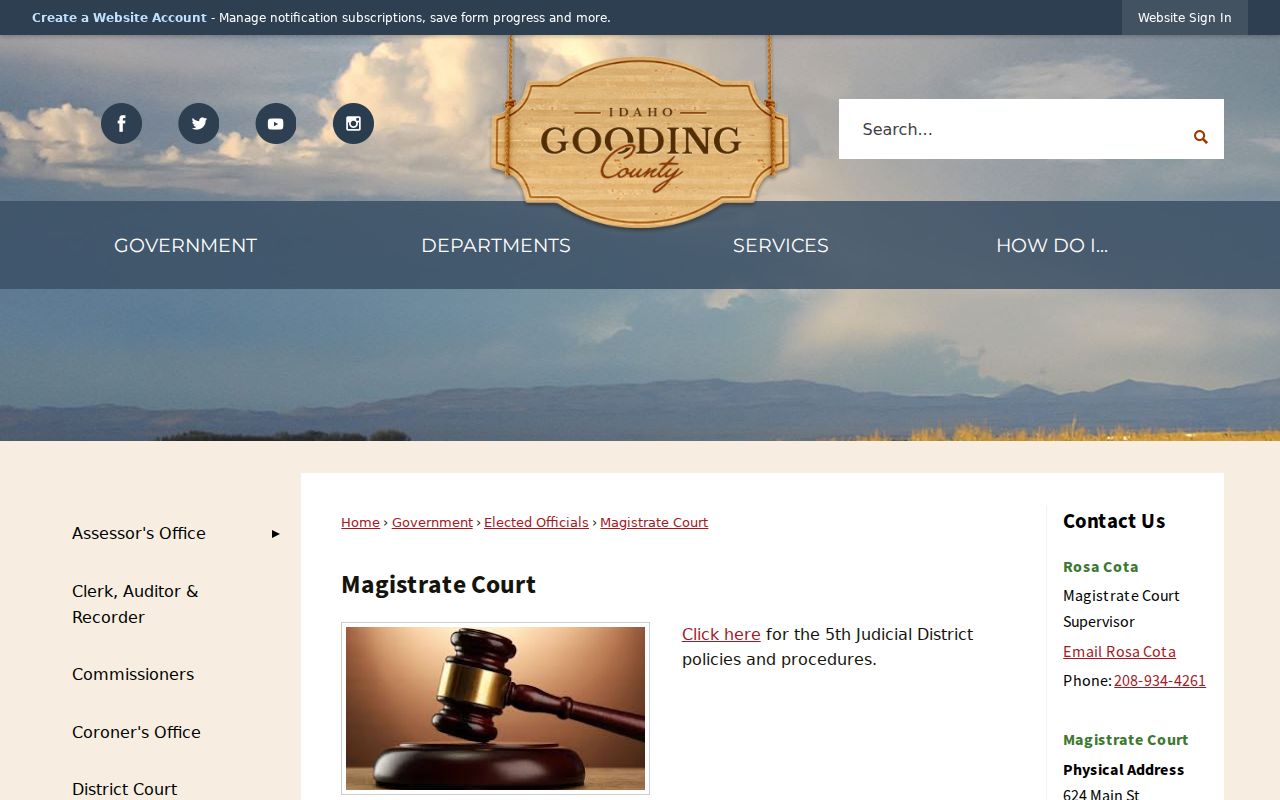
Calling the correct division saves a reader from requesting felony trial papers from the misdemeanor and preliminary-proceeding desk.
Inside a Gooding County Case File
A Gooding County docket is a dated register of case activity, not a short verdict card. It can identify the court, filed charge, hearings, orders, financial entries, disposition, and sentence when those items are public. Minutes show what occurred at a hearing. A judgment or signed order gives firmer proof of the result than a lone docket label.
| Case Number and Court | Identifies the Gooding County file and the division responsible for it. |
|---|---|
| Charging Document | The complaint, information, or indictment states the charge actually filed. |
| Docket Entries | A chronological list of filings, hearings, notices, and court action. |
| Hearing Dates | Scheduled or completed events, with time and location when public. |
| Disposition and Judgment | The outcome by charge, supported by the signed judgment or order. |
| Sentence and Conditions | Custody, probation, restitution, fines, and other public terms after conviction. |
Some fields can be redacted or withheld. Presentence reports, victim and restitution sheets, personal identifiers, pending-warrant support, unreturned search-warrant material, and sealed content are not generally open through the public view.
Call Gooding Clerk for Missing Documents
Remote searching does not replace the courthouse archive. District Court can be reached at 208-934-4861 and publishes Monday through Thursday hours of 7:30 a.m. to 5:30 p.m. Magistrate Court lists 208-934-4261 and weekday hours. The general Clerk, Auditor and Recorder office lists 208-934-4841. Published Friday schedules differ, so call the exact counter before making a trip.
The official clerk page documents the institutional custodian.
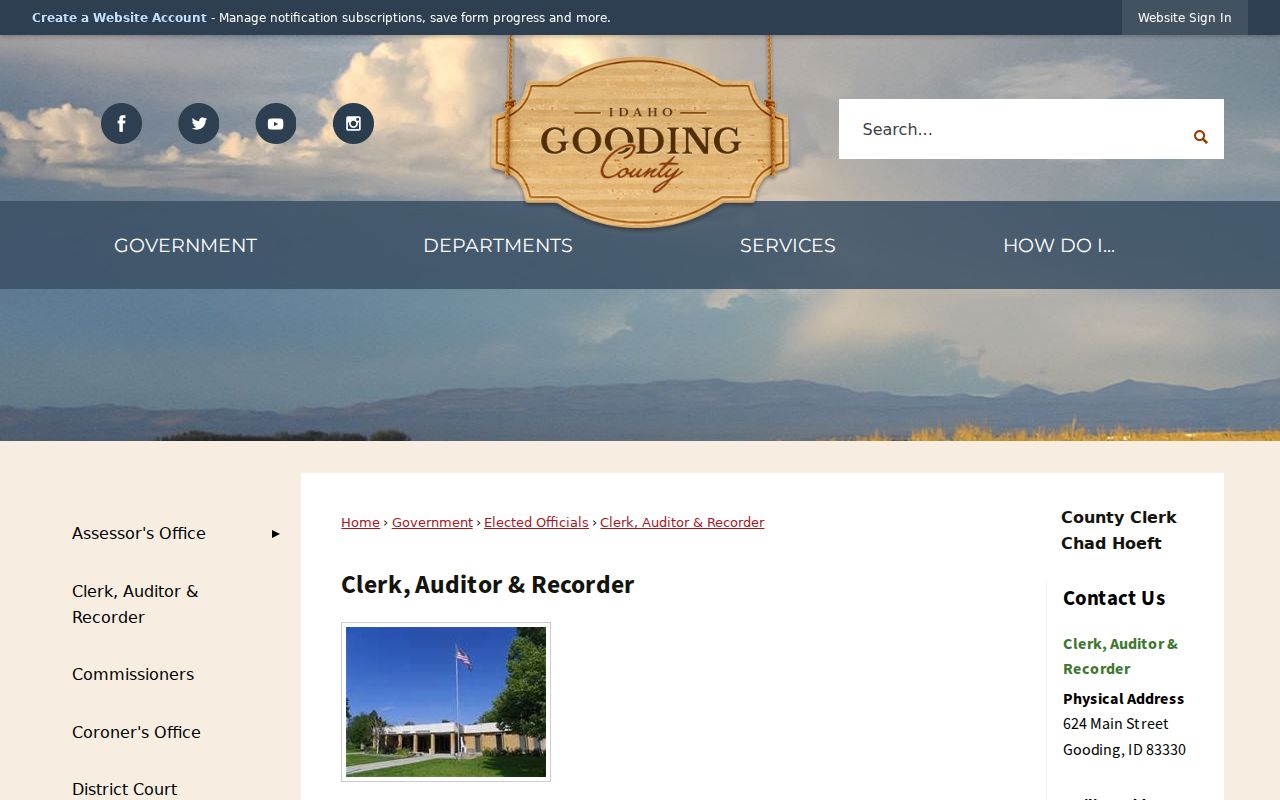
Give staff the case number, document title, and approximate filing date, and ask whether archive retrieval or redaction review is needed.
How a Gooding Criminal Case Moves
A criminal file changes as the case advances. The first court charge may differ from the arrest charge because the prosecuting attorney decides what to file. Felony preliminary work may begin before a magistrate, followed by an information or indictment and arraignment in District Court. Motions and hearings then build the record. A plea or trial determines the route to disposition and, after conviction, sentencing.
Case flow: Charges Filed › Arraignment › Pretrial › Plea or Trial › Disposition › Sentencing
“Dismissed” means a charge ended without conviction. “Acquitted” means a not-guilty result. A deferred judgment postpones judgment while stated conditions are completed. None of those terms alone proves the related booking or BCI arrest cycle has vanished. Readers comparing the arrest with what was filed can use the separate Gooding County arrest lookup.
Gooding Court Copies and Certificates
Idaho law supplies a concrete copy schedule. Under Idaho Code 31-3201, a clerk-made copy costs $1 per page, comparison or conformance of a prepared copy costs $0.50 per page, and a certificate and seal add $1. Ask before ordering whether postage, archive retrieval, redaction review, or another authorized charge applies.
The source image below comes from the official Idaho Legislature fee provision.
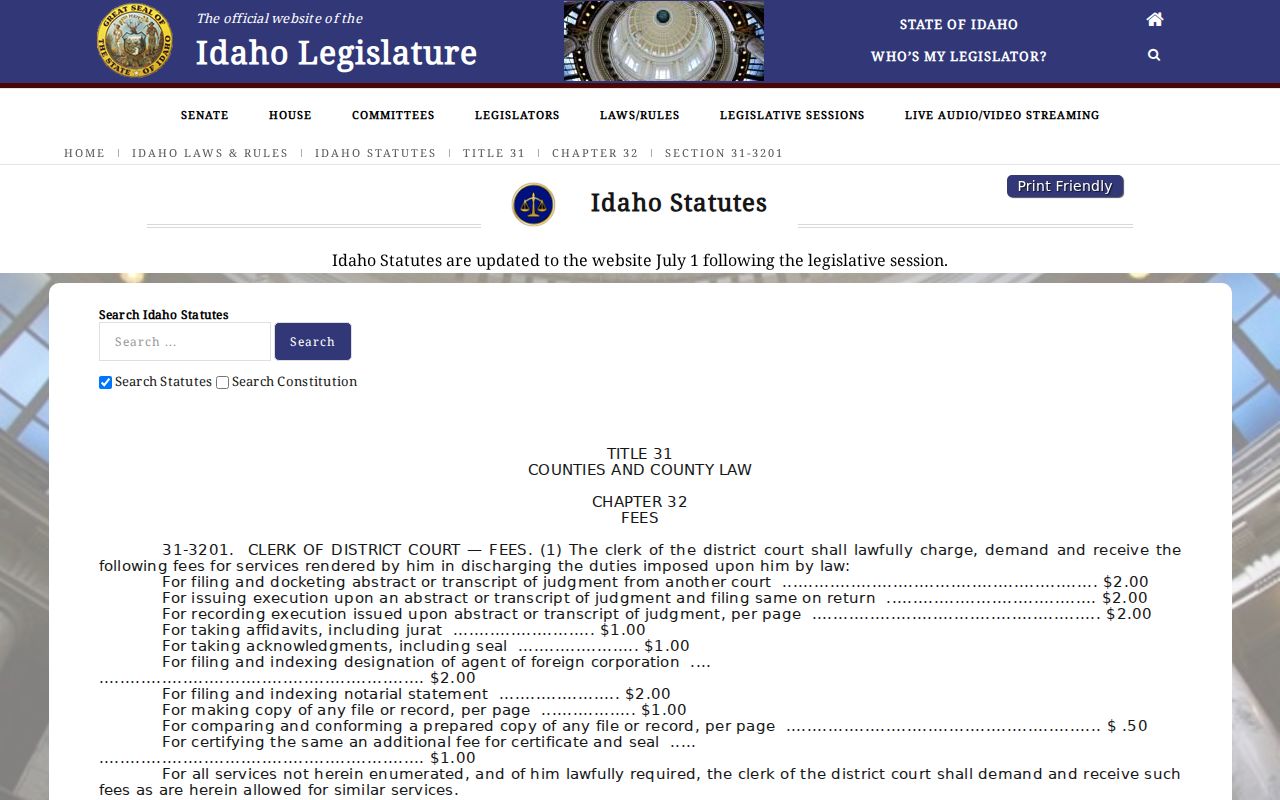
A plain copy may help with reading a file, while a certified copy bears the clerk's formal certification for uses that require it.
Read Gooding Docket Events Carefully
An arraignment states the charge and takes a plea. A docket is merely the running event register. A plea agreement is a negotiated proposal subject to court acceptance, while a conviction is the judgment of guilt after a plea or verdict. Bond concerns release and appearance; it does not decide guilt. Restitution is payment ordered for a compensable loss. These distinctions keep interim entries from being mistaken for final results.
For a definitive outcome, locate the charge-level disposition and then obtain the signed judgment or dismissal order. A status line can lag, and one case can contain several charges with different outcomes. Gooding County case records should therefore be read charge by charge rather than reduced to a single label.
Gooding Case Record Access Restrictions
Idaho Court Administrative Rule 32 controls public judicial-record access. It covers exemptions, requests, bulk distribution, and records that are sealed or shielded. A sealing order remains public but should not disclose the protected material. Juvenile matters, protected victim data, personal identifiers, presentence reports, and specified warrant material can be restricted.
The official rule image provides provenance for those Gooding County access limits.
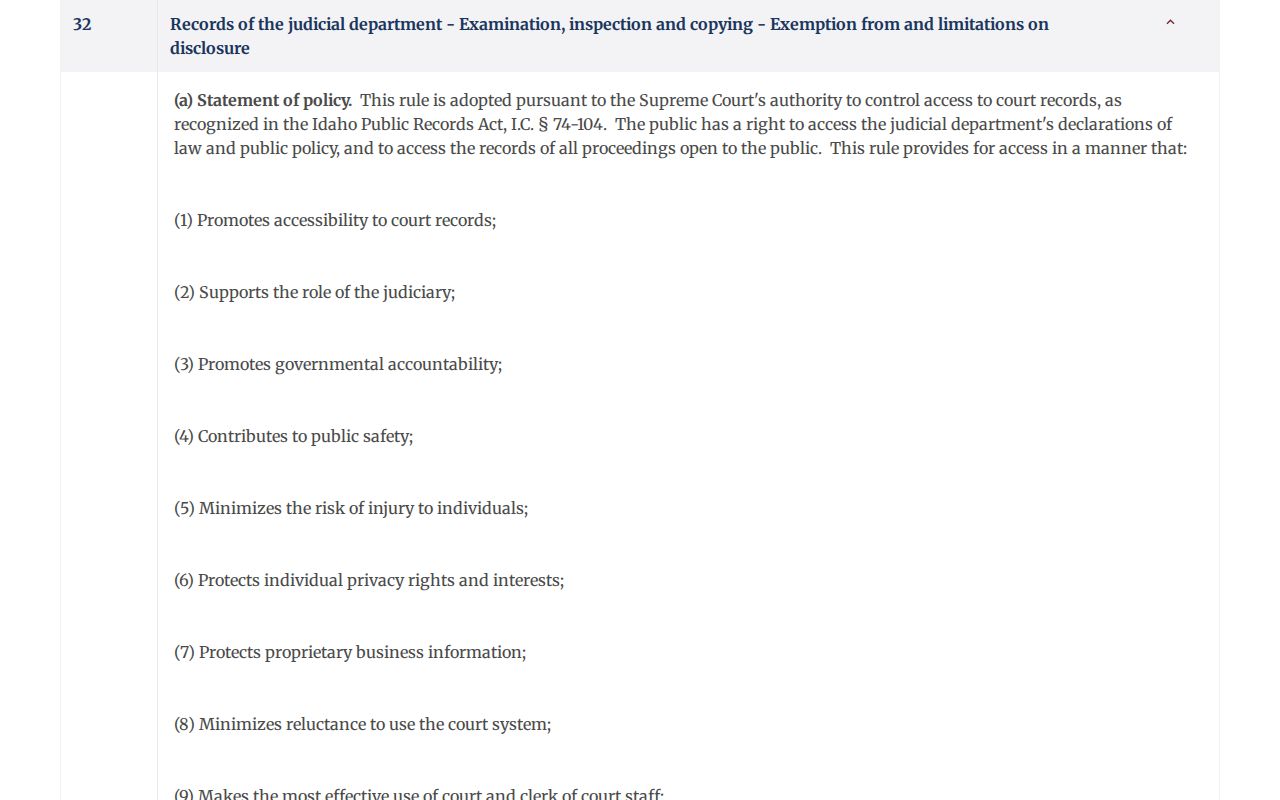
If iCourt shows no match, check spelling, name order, location, filing delay, and case number. Then ask the clerk whether the record is older, sealed, unavailable online, or filed in another division. No result is not proof that no case exists.